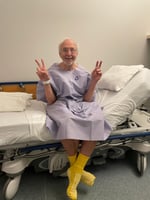

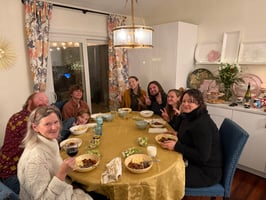
We used to entertain like it was a performance ... rehearsals, scene painting, choreography ......
Ten years ago, Parkinson’s entered our relationship like an uninvited third wheel.
It did not arrive dramatically. I vividly remember watching Lee walk toward me on a beach “carrying” his left arm. He’d not felt well that fall; told me he just didn’t have any spring in his step. There had been doctor visits for tendonitis, visits to a chiropractor, but nothing conclusive. No real tremor or anything we would have associated with Parkinson’s. A stiffness, a constant aching back that didn’t stretch away.
Then a neurologist’s office. I heard him say … through a disturbingly thin wall … “don’t cry.”
Parkinson’s changes things.
For us, the first thing it changed was our marital status. With five adult children between us, we knew things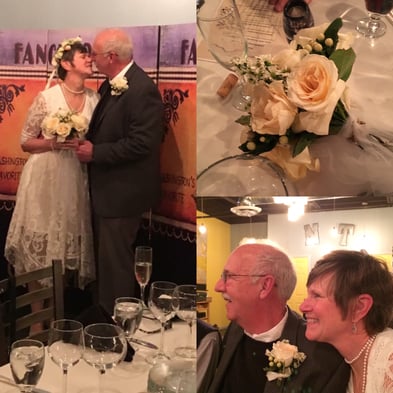 could get complicated with chronic illness. We had what I fondly called a “pop-up wedding” at a favorite restaurant. We honeymooned for two weeks in France in June, followed by a week in Northern Michigan a few weeks later. That was a pretty typical pace for us … tons of travel, food, adventure. And that breakneck speed really continued for several seasons.
While Parkinson’s is known for physical changes … seen and unseen … it changes life’s pace first.
The speed at which you navigate a crowd. The time it takes to button a shirt and put on shoes. The length of the morning routine. The calculation behind a dinner invitation.
Energy becomes currency as it’s budgeted and invested. It is not squandered.
You also learn that the world is not designed for variability. It is designed for consistency. Predictability. Efficiency.
Parkinson’s is none of those.
But here is what we have learned:
The pace changes. The appetite does not.
We still want to travel.
We still want to host.
We still want to attend a concert and plan the next thing.
What changes is how.
We build margins into days that used to be tightly scheduled. We leave early without apology.
We say "no" more often — and mean it. We give ourselves permission to enjoy our home more and not feel punished.
We have become ruthless about what actually matters. And strangely, that has clarified things.
There is a particular genre of storytelling around illness that we quietly reject. It casts the diagnosed person as a warrior and the spouse as a hero. It makes ordinary adaptation sound like sainthood. It is neither.
Most days are not dramatic. They are logistical. Medication timing. Energy mapping. Weather considerations. Micro-adjustments invisible to anyone else. The quick scan of a restaurant waiting area, knowing the need for a comfortable bench to wait to be seated; the availability of a booth versus a (ridiculous, tiny … who thinks that is comfortable?) chair.
The real work of chronic illness is not bravery. It is calibration. And partnership.
There is grief in this life. That would be dishonest to ignore. You grieve former ease. Former speed. Former assumptions. But grief does not eliminate joy.
We still plan delicious meals and enjoy our lives.
We still go out with friends and enjoy their company and (carefully chosen) venues.
We still laugh — sometimes at Parkinson’s itself.
What we refuse to lose is curiosity.
Illness narrows some pathways. It sharpens others. It forces you to ask better questions.
What is worth the energy? Who is worth the effort? What do we want to remember from this year? Parkinson’s has changed our life. It has not diminished it. It has made it more deliberate. And if there is one unexpected gift in that, it is this: When you no longer assume unlimited tomorrows, you plan differently for tonight.